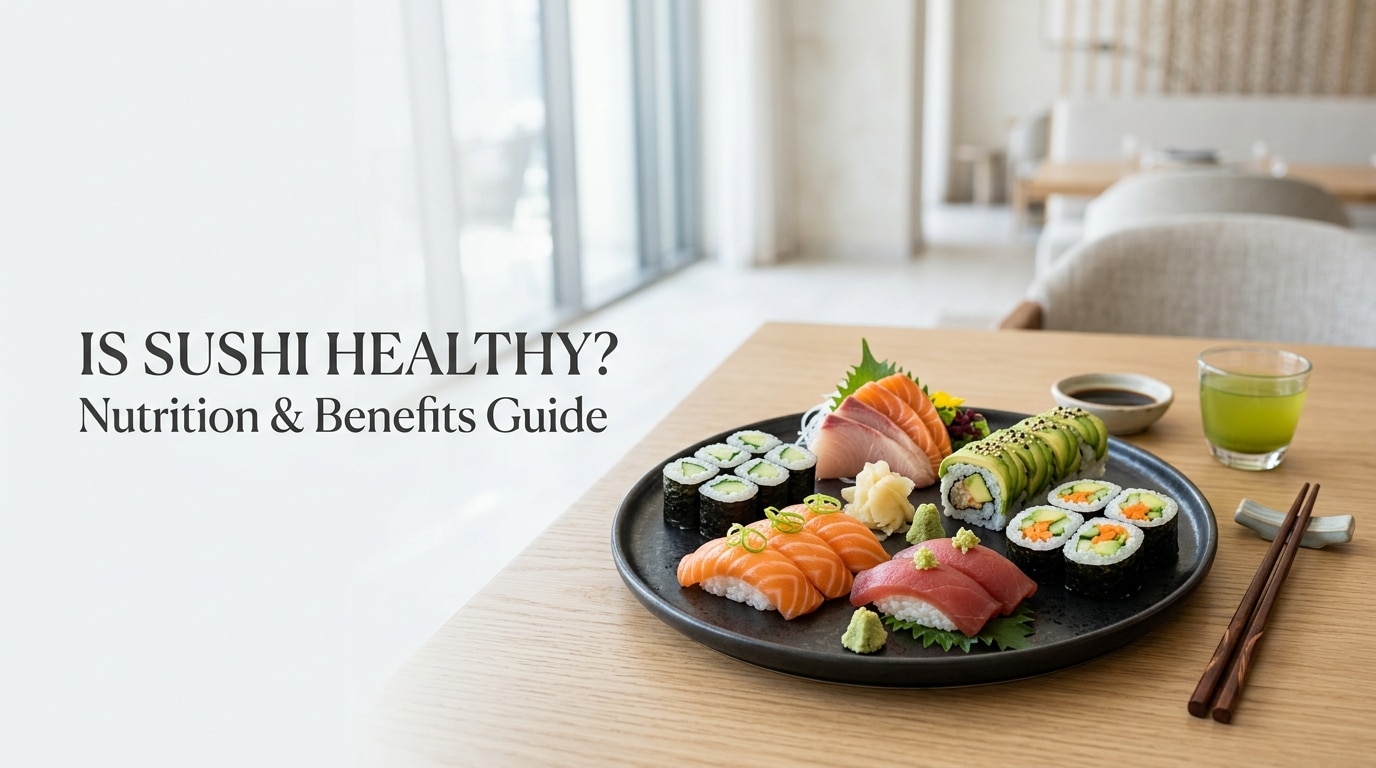
Simple sushi made with fish, vegetables, nori, and a moderate amount of rice can provide protein, omega-3 fatty acids, vitamins, and minerals. On the other hand, fried fillings, cream cheese, mayonnaise-based sauces, sweet sauces, and large portions can make some rolls much higher in calories, fat, carbohydrates, or sodium.
For people eating sushi in Dubai, the same principle applies: the name of the roll alone does not tell you whether it is a healthy choice. Looking at the ingredients is much more useful.
Is Sushi Healthy?
Yes, sushi can be healthy when you choose nutrient-rich ingredients and reasonable portions. Fish can provide high-quality protein and omega-3 fatty acids, while vegetables and nori contribute additional nutrients. Sushi can also be a practical way to include seafood in your diet.
But sushi is not automatically healthy just because it contains fish. A roll made with tempura, creamy sauces, fried toppings, and a large amount of rice can have a very different nutritional profile from simple salmon nigiri or sashimi.
A useful way to think about sushi is to look at four things:
- The protein: salmon, tuna, shrimp, or another seafood.
- The carbohydrate: mainly sushi rice.
- The additions: vegetables, avocado, nori, sauces, or cream cheese.
- The preparation: raw, cooked, fried, or heavily sauced.
The overall combination determines whether your meal is relatively light and nutrient-dense or much more calorie-dense.
Sushi Nutrition: What Does Sushi Provide?
There is no single nutrition profile for sushi because a cucumber roll, salmon nigiri, California roll, and tempura shrimp roll contain very different ingredients.
Sushi Protein
Fish and seafood can make sushi a useful source of protein. Salmon, tuna, shrimp, and other seafood provide protein along with different vitamins and minerals.
Fish also provides nutrients such as vitamin B12, selenium, vitamin D, iodine, and omega-3 fatty acids, although the amounts vary by species. The FDA specifically identifies fish as a source of protein, DHA and EPA omega-3 fats, vitamin B12, vitamin D, selenium, iodine, and other nutrients.
If protein is a priority, compare a simple fish-based roll with a roll where the majority of the filling consists of rice, sauces, or fried ingredients.
Sushi Carbs
Sushi rice is a significant source of carbohydrates. Because sushi uses seasoned rice, the carbohydrate content can increase as you eat more pieces.
This does not make sushi inherently unhealthy. Carbohydrates can be part of a balanced diet. The issue is more about the overall portion and what accompanies the rice.
If you are specifically trying to reduce carbohydrate intake, sashimi is a straightforward alternative because it is served without sushi rice.
Sushi Calories
The calorie content of sushi varies considerably according to ingredients and portion size.
A simple roll containing fish, vegetables, nori, and rice will generally have a different calorie profile from a specialty roll containing fried seafood, cream cheese, spicy mayonnaise, and sweet sauces. Research and nutrition guidance also emphasize that specialty rolls can become substantially more calorie-dense because of these additions.
This is why judging a sushi meal by the number of pieces alone can be misleading. Six pieces of one roll may contain very different ingredients from six pieces of another.
Omega-3 Fatty Acids
Fatty fish such as salmon can provide omega-3 fatty acids, including EPA and DHA. These are important nutrients, and fish is recognized as a valuable source of omega-3 fats.
However, the amount depends on the type of fish and serving size. Choosing salmon or other appropriate fatty fish can therefore add nutritional value to a sushi meal.
Sushi Health Benefits
The potential health benefits of sushi mainly come from its seafood, vegetables, seaweed, and other nutrient-containing ingredients rather than from sushi as a category.
1. Provides High-Quality Protein
Fish and seafood provide protein that helps support normal body functions and maintenance of muscle and other tissues.
Choosing a sushi meal with a reasonable amount of fish or seafood can therefore make it more protein-focused than a meal dominated by rice and sauces.
2. Can Provide Omega-3 Fats
Salmon and certain other fish provide EPA and DHA. Regularly including fish as part of a balanced eating pattern can help you obtain these important fatty acids.
This is one reason simple salmon-based sushi can be a nutritionally useful choice.
3. Contains Important Micronutrients
Fish can provide nutrients including vitamin B12, vitamin D, selenium, iodine, and other minerals. Nori and other sea vegetables can also contribute iodine, although the amount can vary significantly depending on the product and portion.
Vegetable ingredients such as cucumber and avocado add different nutrients and can make a roll more varied.
4. Can Include Vegetables and Healthy Fats
Avocado, cucumber, carrots, mushrooms, and other vegetables can add nutrients and variety to sushi.
Avocado also provides unsaturated fat and fiber. A vegetable-filled roll can therefore be a useful option, particularly when it is not loaded with creamy sauces or fried ingredients.
5. Can Fit Into a Balanced Diet
Healthy eating does not require eliminating foods such as rice. Sushi can fit into a balanced diet when portions and ingredients are appropriate for your individual nutritional needs.
The key is not to label every sushi roll as either “healthy” or “unhealthy.” Look at the complete meal.
Is Sushi Healthy for Weight Loss?
Sushi can fit into a weight-loss diet, but the choice of sushi matters.
Weight loss depends on your overall energy intake and expenditure over time, not on whether a particular food is called sushi. A simple fish-and-vegetable roll can be considerably different from a large specialty roll containing tempura, cream cheese, and mayonnaise-based sauces.
If you are trying to keep a meal relatively lighter, consider:
- Simple salmon or tuna rolls
- Sashimi
- Nigiri in a moderate portion
- Vegetable-based rolls
- Rolls with avocado and vegetables
- Edamame or other nutrient-dense sides
You may want to limit rolls that combine several calorie-dense additions, such as fried seafood, tempura batter, cream cheese, and creamy sauces.
Portion size also matters. Sushi pieces are small, which can make it easy to order and eat more than you intended.
Sashimi vs Sushi for Weight Loss
Sashimi and sushi are not the same thing.
Sashimi consists of sliced seafood served without sushi rice. Sushi generally includes vinegared rice along with ingredients that may include raw or cooked seafood, vegetables, or other fillings.
If your priority is reducing carbohydrates from rice, sashimi can make that easier. If you want a combination of carbohydrates, protein, vegetables, and seafood, sushi rolls or nigiri can provide a more complete meal.
Neither automatically makes one diet better than the other. Your overall diet, portion size, and nutritional needs still matter.
What Are the Healthiest Sushi Options?
The healthiest sushi options depend on your nutritional goals, but simple preparations generally make it easier to control calories, sauces, sodium, and added fats.
Salmon Nigiri
Salmon provides protein and omega-3 fatty acids, while nigiri uses a relatively simple combination of fish and sushi rice.
Simple Salmon or Tuna Rolls
Simple rolls can provide seafood without the multiple fried components and sauces found in some specialty rolls.
Vegetable Rolls
Vegetable sushi can provide ingredients such as cucumber, avocado, carrot, or other vegetables. These options can be particularly useful when you want to increase the variety of plant foods in your meal.
Sashimi
Sashimi removes the rice from the equation and focuses on the seafood itself. It can be useful if you are looking for a protein-focused, lower-carbohydrate option.
Cooked Seafood Sushi
If you prefer to avoid raw fish, sushi made with cooked seafood can be an alternative. Shrimp and cooked salmon, for example, can provide seafood without requiring raw fish.
Which Sushi Ingredients Should You Limit?
Not every ingredient needs to be avoided. The more useful approach is to understand which additions can significantly change the nutritional profile of a roll.
Tempura and Fried Ingredients
Tempura adds a fried component to sushi. Rolls containing tempura shrimp or other battered ingredients can be more calorie-dense than simple seafood rolls.
Cream Cheese
Cream cheese adds saturated fat and calories while changing the texture and flavor of the roll. Philadelphia-style rolls are a common example.
Spicy Mayo and Creamy Sauces
Sauces can be easy to overlook because they may be drizzled over the finished roll. However, creamy sauces can add additional fat and calories.
Sweet Sauces
Some specialty rolls use sweet sauces such as eel sauce. If you are watching added sugars or overall calories, pay attention to how much sauce is used.
Soy Sauce
Sodium is another consideration. Sushi itself does not necessarily have to be extremely high in sodium, but soy sauce and other salty sauces can substantially increase the sodium content of the meal.
Instead of soaking each piece in soy sauce, try using a smaller amount or dipping only part of the sushi.
Is Raw Sushi Safe?
Raw fish introduces food-safety considerations that do not apply in exactly the same way to cooked fish.
The CDC lists raw or undercooked fish and shellfish, including sushi and sashimi, among foods that carry greater foodborne-illness risk than properly cooked seafood.
That does not mean every piece of raw sushi is unsafe. It means preparation, storage, handling, and sourcing matter.
People at higher risk from foodborne illness should take particular care. The FDA advises that pregnant people and children should eat fish that has been cooked to safe internal temperatures rather than raw fish such as sushi or sashimi.
If food safety is your main concern, cooked seafood sushi is a straightforward alternative.
What About Mercury in Sushi?
Mercury is another reason to pay attention to the type of fish you choose.
Nearly all fish contain at least trace amounts of methylmercury, but concentrations vary. Larger, longer-lived predatory fish can accumulate more mercury than many smaller fish.
This is particularly relevant for people who are pregnant or breastfeeding and for young children, because the FDA and EPA provide specific fish-consumption advice for these groups.
You do not need to avoid fish altogether to avoid mercury. The FDA emphasizes choosing a variety of fish that are lower in mercury while still providing valuable nutrients.
For anyone who eats sushi regularly, varying the types of seafood consumed can be a practical way to avoid relying heavily on one particular species.
How to Order Healthier Sushi in Dubai
If you are choosing sushi at a Dubai restaurant, start by reading the ingredients rather than judging the roll by its name.
For example, Japanos Dubai’s current sushi menu includes relatively simple choices such as salmon nigiri, tuna nigiri, shrimp nigiri, salmon sashimi, tuna sashimi, cucumber hosomaki, and avocado hosomaki. It also includes specialty options containing ingredients such as cream cheese, spicy mayonnaise, tempura batter, and sweet sauces.
That variety shows why the ingredients matter more than simply ordering “sushi.”
A practical order might include a simple fish-based option, a vegetable roll, and a side that complements your meal. If you are watching calories or carbohydrates, you can give more of your meal to sashimi or simpler fish-based sushi rather than choosing several heavily sauced specialty rolls.
If you are ordering for several people, mixing simple rolls with specialty rolls can also give everyone options without making the entire meal dependent on fried or sauce-heavy dishes.
A Simple Guide to Choosing Healthier Sushi
You do not need to memorize every sushi ingredient. Before ordering, ask yourself these five questions:
- What is the main protein?
Fish and seafood can provide protein and important nutrients. - How much rice is included?
Rice contributes carbohydrates, so portion size matters if you are monitoring carbohydrate or calorie intake. - Is anything fried?
Tempura and other fried ingredients can substantially change the nutritional profile. - How much sauce is included?
Creamy and sweet sauces can add calories, fat, sugar, or sodium. - Is the seafood appropriate for me?
Consider mercury guidance and raw-fish food-safety considerations, particularly during pregnancy, childhood, or when you have a higher risk of foodborne illness.
This simple check can help you make an informed choice without having to avoid sushi altogether.
Common Mistakes When Choosing Sushi
One of the most common mistakes is assuming that every sushi roll has roughly the same nutritional value. A simple salmon roll and a tempura roll covered in mayonnaise can be very different meals.
Another mistake is focusing only on the fish. The rice, sauces, fried fillings, cream cheese, and portion size can have a significant effect on the final meal.
It is also easy to overlook sodium. Even if the sushi itself contains relatively simple ingredients, repeatedly dipping every piece in soy sauce can add a substantial amount of sodium.
Finally, avoid assuming that raw automatically means healthier. Raw fish has nutritional value, but it also has food-safety considerations that cooked seafood does not have.
The Bottom Line: Is Sushi Healthy?
So, is sushi healthy? It can be.
The healthiest choice is usually not about avoiding sushi completely. It is about understanding what is in the roll and how the complete meal fits your nutritional needs.
Fish can provide high-quality protein and omega-3 fatty acids, while vegetables, avocado, and nori can contribute additional nutrients. At the same time, tempura, cream cheese, creamy sauces, sweet sauces, large portions, and excessive soy sauce can change the nutritional profile considerably.
If you are dining in Dubai, the same approach works whether you are ordering a simple nigiri, sashimi, classic maki, or a specialty roll. Look at the ingredients, consider your portion, and choose the combination that fits your goals.
For anyone who enjoys sushi regularly, variety and balance matter more than labeling one particular roll as “healthy” or “unhealthy.”
FAQs About Sushi and Health
1. Is sushi good for you?
Sushi can be good for you when it contains nutritious ingredients such as fish, vegetables, nori, and moderate portions of rice. Fish can provide protein and omega-3 fatty acids, but fried ingredients, creamy sauces, and excessive portions can make some sushi meals much higher in calories, fat, or sodium.
2. Is sushi healthy for weight loss?
Sushi can fit into a weight-loss diet, but portion size and ingredients matter. Simple fish or vegetable rolls and sashimi can make it easier to control calories than specialty rolls containing tempura, cream cheese, or creamy sauces.
3. What is the healthiest sushi to order?
Simple salmon or tuna sushi, sashimi, vegetable rolls, and sushi with minimal added sauce are generally easier choices when you want a nutrient-focused meal. The best option still depends on your individual nutritional needs.
4. Is sushi high in sodium?
Some sushi meals can be high in sodium, particularly when they include salty sauces, soy sauce, and processed ingredients. Using less soy sauce and choosing simpler rolls can help reduce your overall sodium intake.
5. Is raw sushi safe to eat?
Raw sushi carries a higher foodborne-illness risk than properly cooked fish. The CDC identifies raw or undercooked seafood, including sushi and sashimi, as a riskier food choice. Pregnant people and children are advised by the FDA to avoid raw fish and choose properly cooked seafood instead.