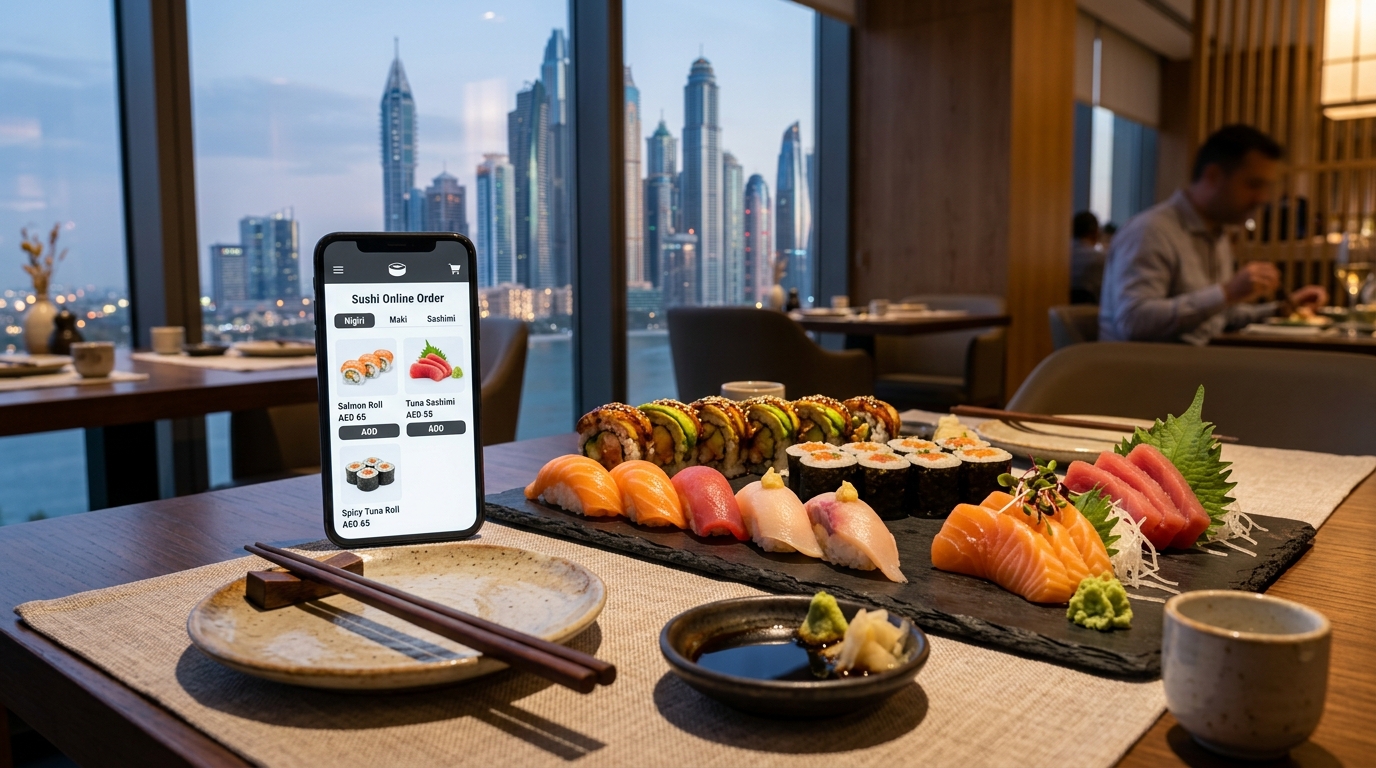
Whether you are ordering lunch for yourself, dinner for your family, or sushi for a gathering, this guide explains exactly how to order sushi online in Dubai. You will learn how to choose a sushi restaurant, understand a sushi menu, select the right dishes, check delivery details, and place an order with confidence.
How to Order Sushi Online in Dubai
The easiest way to order sushi online in Dubai is to choose a reliable Japanese restaurant, check its delivery area, browse the sushi menu, decide between rolls, nigiri, sashimi, and combination platters, review your order, and then confirm delivery details and payment.
The process usually takes only a few minutes, but understanding the menu before ordering can help you make better choices. If you are new to sushi, you do not need to know every Japanese term. Start with familiar ingredients such as salmon, tuna, shrimp, cucumber, avocado, or cooked seafood, then explore more options as you become comfortable.
At Japanos Dubai, the sushi menu includes nigiri, sashimi, hosomaki, maki, special rolls, and larger sushi combinations, giving both beginners and regular sushi lovers several ways to build an order.
Step 1: Choose a Sushi Restaurant That Delivers to Your Area
Before choosing individual dishes, check whether the restaurant delivers to your location. Dubai is spread across many communities, so delivery coverage, estimated arrival time, and available ordering channels can vary depending on where you are.
For example, your needs may be different if you are ordering sushi to a home in Jumeirah, an office in Business Bay, a hotel in Downtown Dubai, or an apartment in Dubai Creek Harbour. Enter your exact delivery location before spending time building your order whenever possible.
A good sushi delivery restaurant should also make its menu easy to understand. Look for clear dish names, ingredient descriptions, portion sizes, prices, and useful information about whether an item contains raw or cooked ingredients.
Japanos Dubai offers sushi and Japanese dishes for delivery across Dubai, with its menu organized into categories that make it easier to browse different types of Japanese food.
What to Check Before Ordering
Take a moment to look at the restaurant’s delivery information and menu. You should be able to identify:
- Whether your location is within the delivery area
- Available delivery times
- Minimum order requirements, if any
- Delivery charges, if applicable
- Payment options
- Sushi ingredients and portion sizes
- Available sauces or add-ons
Doing this first prevents a common problem: spending several minutes choosing your meal only to discover that delivery is unavailable to your address.
Step 2: Open the Sushi Menu and Understand the Basics
The next step is understanding what you are actually looking at. A sushi menu in Dubai can include several different styles, and each one offers a different eating experience.
Sushi generally combines seasoned rice with ingredients such as seafood, vegetables, and seaweed. However, not every sushi item contains raw fish. Many rolls use cooked seafood, vegetables, tempura, or other ingredients, making them suitable choices for people who are not comfortable with raw seafood.
Nigiri
Nigiri consists of a small portion of sushi rice topped with an ingredient, commonly fish or seafood. It is a good choice when you want to taste the main ingredient without a lot of additional fillings or sauces.
Salmon, tuna, shrimp, and eel are common choices. Japanos, for example, currently lists salmon, tuna, shrimp, and eel nigiri options on its Dubai sushi menu.
If you already enjoy sushi and want a straightforward seafood-focused option, nigiri is worth considering.
Maki Rolls
Maki refers to rolled sushi, usually prepared with sushi rice and fillings wrapped with nori seaweed. These rolls can contain fish, seafood, vegetables, sauces, or combinations of several ingredients.
Maki is often one of the easiest starting points for beginners because you can choose familiar flavours. California rolls, salmon rolls, spicy tuna rolls, and vegetable rolls are examples of combinations you may find on a sushi menu.
Special or Signature Rolls
Special rolls usually combine several ingredients and may include sauces, toppings, tempura elements, or creative flavour combinations.
They can be a good choice when you want something more exciting than a basic roll. However, read the description carefully because special rolls can contain multiple flavours, sauces, or textures that may not suit everyone.
Sashimi
Sashimi is different from sushi because it is served as sliced seafood without sushi rice. It is generally chosen by people who specifically enjoy the taste and texture of seafood itself.
If you are new to Japanese food, you may find rolls easier to start with because the rice and other ingredients create a more balanced combination.
Step 3: Decide What Type of Sushi You Want
Once you understand the menu, think about what you actually want from the meal.
If you want something simple and familiar, choose a basic maki or a salmon or tuna option. If you want a more traditional seafood-focused meal, combine nigiri with sashimi. If you are ordering for several people, a mixed platter or sushi selection can provide more variety.
Your choice should also depend on whether you prefer raw, cooked, vegetarian, or mixed ingredients.
For example, someone ordering sushi for the first time might choose California rolls, vegetable maki, or cooked shrimp-based rolls. A regular sushi eater may prefer salmon nigiri, tuna sashimi, spicy tuna rolls, or a combination of different styles.
There is no single “best” sushi order for everyone. The best choice depends on your taste, appetite, budget, and the people sharing the meal.
Step 4: Choose Between Individual Items and Sushi Platters
If you are ordering only for yourself, individual portions give you more control. You can select exactly what you like and avoid paying for items you do not want.
For two or more people, however, a sushi platter can be easier. Combination selections usually include several types of sushi, allowing everyone to try different flavours without adding every item individually.
For example, Japanos currently offers combination selections such as a 10-piece salmon mix, a 21-piece Momiji selection, a 25-piece Tempura Mix, and a 24-piece XL Maki & Nigiri Gourmet selection.
When ordering a platter, do not focus only on the number of pieces. Look at what those pieces actually contain. A 20-piece platter made mostly from one type of roll gives you less variety than a mixed selection containing rolls and nigiri.
Step 5: Pick Your Main Flavours
This is where your personal preference matters most.
Salmon is often a comfortable starting point because it has a rich but relatively mild flavour. Tuna provides a firmer texture and cleaner seafood taste. Shrimp can be a good option when you prefer cooked seafood, while eel usually has a richer flavour and is commonly paired with a sweet sauce.
Vegetarian sushi can include cucumber, avocado, and other vegetables. Spicy rolls may include chilli-based sauces or spicy mayonnaise, while tempura rolls offer a crispier texture.
If you are ordering for a group, avoid choosing only one flavour profile. A better approach is to combine different textures and tastes.
For example, you could combine:
- A salmon-based roll for a familiar flavour
- A tuna or spicy roll for something stronger
- A vegetable roll for a lighter option
- Nigiri for a simple seafood choice
- A cooked or tempura roll for someone who does not want raw fish
This gives everyone more choice without making the order unnecessarily complicated.
Step 6: Check Whether the Sushi Contains Raw or Cooked Ingredients
One of the most important steps when ordering sushi online is reading the ingredient description.
Do not assume that every sushi roll contains raw fish, and do not assume that every seafood roll is cooked. Restaurants often offer both options.
If you prefer cooked food, look for ingredients such as cooked shrimp, steamed seafood, tempura, cooked salmon, or other clearly identified cooked fillings.
If you enjoy raw seafood, look for salmon, tuna, sashimi, and other dishes where the menu clearly identifies the ingredient.
If you are ordering for several people, checking this detail is especially important because different diners can have very different preferences.
Step 7: Add Sides to Complete Your Meal
Sushi does not have to be the only thing in your order. Adding one or two sides can make the meal more complete, particularly if you are hungry or ordering dinner.
Japanese food delivery in Dubai commonly includes options such as miso soup, edamame, gyoza, seaweed salad, tempura, and other small dishes.
For example, Japanos offers miso wakame soup, gyoza, tempura, edamame, and wakame salad alongside its sushi selection.
A simple combination could be sushi plus miso soup for a lighter meal. If you are sharing, add an appetizer or side dish that can be enjoyed by everyone.
The key is balance. You do not need to add several sides simply because they are available.
Step 8: Think About Portion Size Before You Checkout
One of the easiest mistakes when ordering sushi online is ordering based on piece count alone.
Sushi pieces vary in size and type. Nigiri, maki, sashimi, and larger rolls do not necessarily provide the same amount of food. A person with a large appetite may need more than someone looking for a light lunch.
For one person, a smaller combination or a few individual items may be enough. For two people, a mixed platter with additional sides may work better. For a family or group, consider several different rolls and a larger sharing platter.
If you are unsure, choose variety rather than simply increasing the quantity of one dish. This makes the meal more enjoyable and reduces the chance of ending up with too much of something nobody wants.
Step 9: Review Your Sushi Order Before Paying
Before clicking the final order button, review everything carefully.
Check the restaurant, delivery address, selected dishes, quantities, sauces, drinks, special instructions, delivery charges, and final price.
This is also the right time to check whether you accidentally selected duplicate items or chose a dish with an ingredient that someone in your group does not want.
If you are ordering to an office or hotel, make sure the delivery instructions are clear. Dubai buildings can have different entrances, reception areas, parking arrangements, and access procedures. A clear delivery note can save time when the driver arrives.
Step 10: Choose the Most Convenient Delivery Option
When ordering sushi delivery in Dubai, convenience is one of the main advantages of ordering online. You can order from home, work, or another location without visiting the restaurant.
Depending on the restaurant, you may be able to order through its own website, a food delivery platform, or another available ordering channel. Japanos has promoted online ordering through delivery platforms including Talabat, Deliveroo, and Noon Food.
If you regularly order from the same restaurant, compare the available ordering options before checking out. Look at the final price, delivery time, available offers, and menu selection rather than assuming that every platform provides exactly the same experience.
How to Choose the Best Sushi Delivery in Dubai
The best sushi delivery in Dubai is not necessarily the restaurant with the biggest menu or the most expensive dishes. Look for a restaurant that matches your specific needs.
Freshness should be a priority, especially when ordering sushi containing seafood. Menu transparency is also important because clear ingredient descriptions help customers make informed choices.
Delivery reliability matters too. Sushi should arrive in good condition, with the rolls properly presented and the order complete.
You should also consider variety. A restaurant that offers nigiri, maki, sashimi, vegetarian options, cooked seafood, and combination platters gives you more flexibility.
Finally, look at value rather than price alone. A slightly more expensive order can offer better variety, portioning, ingredients, and overall satisfaction.
What Should You Order If You Are New to Sushi?
If you have never ordered sushi before, do not start by choosing the most complicated roll on the menu. Start with flavours you already recognize.
Salmon or tuna rolls can be a simple introduction. California-style rolls can also work well if you prefer a combination of seafood, vegetables, and rice. Vegetarian rolls are another easy option if you do not eat seafood.
You can then add one new item to your order. For example, try a piece of nigiri alongside a familiar roll.
This approach lets you explore Japanese food gradually instead of ordering several unfamiliar dishes at once.
What to Order for a Sushi Dinner for Two
For two people, variety is usually more useful than ordering a large amount of one type of sushi.
A balanced order could include a mixed sushi selection, one additional roll, and a shared side such as edamame, gyoza, or seaweed salad. If both people enjoy raw seafood, adding sashimi can provide another texture and style.
If one person prefers cooked food, include at least one cooked or tempura-based option so everyone has something they enjoy.
The goal is to create a meal with different flavours, textures, and levels of richness rather than simply maximizing the number of pieces.
Sushi Takeaway vs Sushi Delivery in Dubai
Sushi takeaway and online delivery serve different situations.
Takeaway can make sense when you are already near the restaurant and want to collect your food yourself. It can also be useful if you are heading somewhere nearby and want to avoid waiting for delivery.
Online sushi delivery is more convenient when you are at home, working in an office, staying in a hotel, or simply do not want to travel.
The best option depends on your location and schedule. If convenience is your priority, online delivery is usually the simpler choice.
How to Make Your Online Sushi Order Better
A good sushi order is not necessarily a complicated one. Start by choosing a restaurant you trust, then build your meal around your preferences.
Read the menu descriptions instead of choosing only by photos. Pay attention to raw versus cooked ingredients, sauces, portion sizes, and the number of pieces included.
For groups, mix different styles. For first-time sushi eaters, start with familiar ingredients. For experienced sushi lovers, explore nigiri, sashimi, specialty rolls, or chef-selected combinations.
It is also useful to keep your delivery time in mind. If you are ordering for a meeting, family dinner, or gathering, place the order early enough to allow for normal delivery delays.
A Simple Example of Ordering Sushi Online in Dubai
Imagine you are ordering dinner for two people in Dubai.
First, you enter your delivery location and confirm that the restaurant delivers there. Next, you open the sushi menu and decide that you want a combination of familiar and new flavours.
You could select a mixed sushi platter, add one salmon or tuna roll, and choose a shared side such as miso soup or edamame. Before checkout, you review the ingredients, piece count, price, delivery details, and special instructions.
Once everything looks correct, you place the order and track the delivery if tracking is available.
This simple process takes only a few minutes, but it gives you much more control over what arrives at your door.
Order Sushi Online in Dubai With Confidence
Ordering sushi online in Dubai does not need to be complicated. The key is to understand the menu, choose a restaurant that delivers to your area, select dishes based on your preferences, check raw and cooked ingredients, consider portion sizes, and review your order before paying.
Whether you want a quick lunch, a relaxed dinner at home, or a shared meal with friends, a little planning can make your sushi delivery experience much better.
If you are ready to explore Japanese cuisine, browse the Japanos Dubai sushi menu and choose from sushi, sashimi, nigiri, maki, and specialty combinations prepared for delivery in Dubai.
Frequently Asked Questions About Sushi Delivery in Dubai
1. What is the easiest way to order sushi online in Dubai?
The easiest method is to choose a sushi restaurant that delivers to your location, enter your address, browse the menu, select your preferred sushi and sides, review the total price, and confirm your order. If you are new to sushi, start with familiar ingredients such as salmon, tuna, shrimp, cucumber, or avocado.
2. What should I order if I am trying sushi for the first time?
Start with simple rolls or cooked options if you are unsure about raw seafood. Salmon rolls, California-style rolls, vegetable maki, or cooked shrimp-based dishes can be easier introductions. You can then add nigiri or another specialty roll once you know what flavours you enjoy.
3. How much sushi should I order for two people?
The right amount depends on appetite and the type of sushi you choose. Instead of relying only on the number of pieces, look at the contents of the platter. For two people, a mixed selection combined with one additional roll or side can provide a good variety without unnecessarily ordering several duplicate dishes.
4. Is sushi delivery available across Dubai?
Many sushi restaurants offer delivery across different parts of Dubai, but coverage can vary by restaurant and exact address. Always enter your delivery location before checkout to confirm availability, estimated delivery time, and any applicable delivery charges.
5. What is the difference between sushi, nigiri, and sashimi?
Sushi is a broad category that commonly includes seasoned rice with other ingredients. Nigiri is a small portion of sushi rice topped with seafood or another ingredient. Sashimi is sliced seafood served without sushi rice. Understanding this difference makes it much easier to navigate a Japanese restaurant menu.