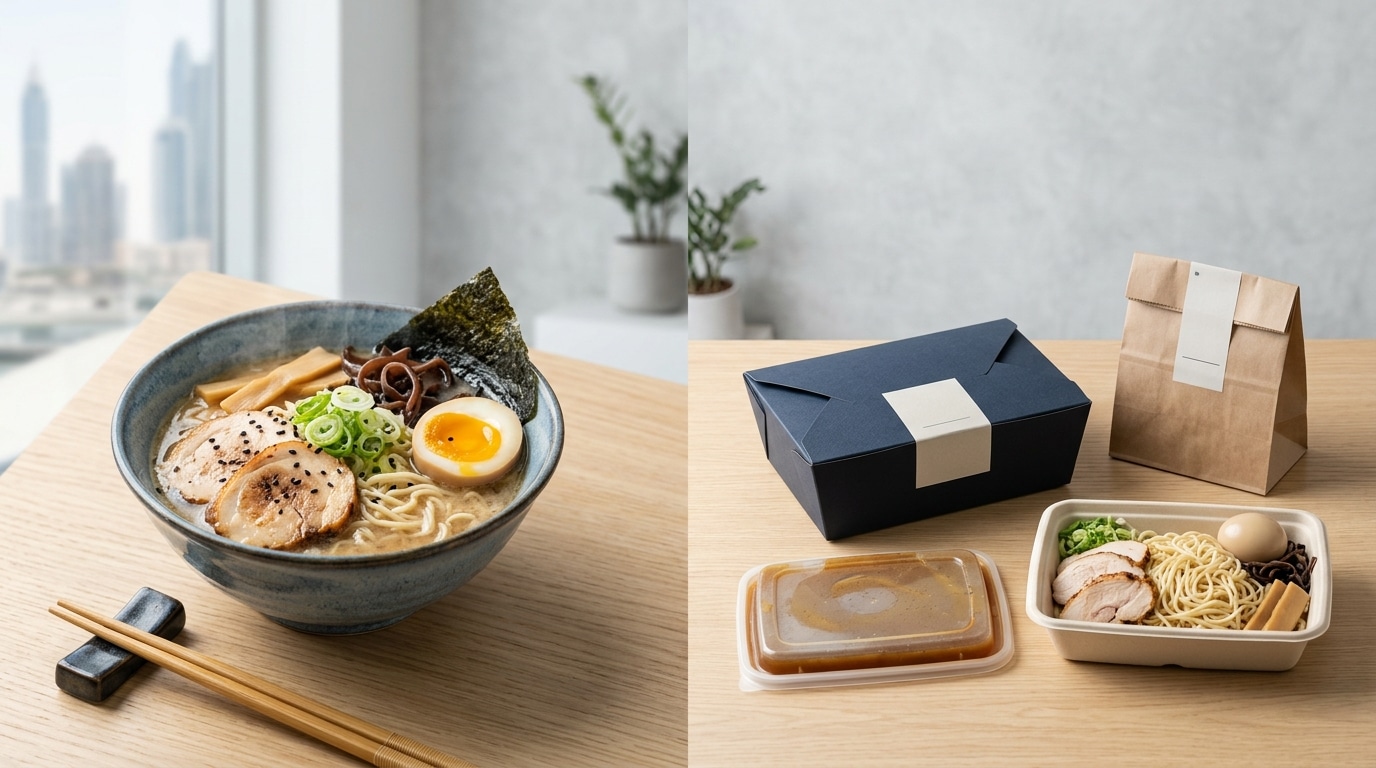
So, does ramen delivery in Dubai actually travel well? Yes, but the way ramen is prepared, packed, transported, and eaten can make a noticeable difference. Unlike many takeaway dishes, ramen has several components that continue changing after cooking, especially the noodles.
If you are planning to order ramen online in Dubai, understanding how delivery affects the broth, noodles, toppings, and temperature can help you choose and enjoy your meal at its best.
How Well Does Ramen Travel During Delivery?
Ramen can travel well when the noodles, broth, toppings, and packaging are handled properly. The main challenge is that noodles continue absorbing liquid after they are cooked. The longer they sit in broth, the softer they can become.
This is especially important with thinner noodles. Myojo explains that Hakata-style thin noodles can absorb broth quickly and become soggy, which is one reason noodle texture and broth pairing matter in ramen.
That means the quality of a delivered ramen bowl is not determined only by how good it was when it left the kitchen. Travel time and packaging are also part of the eating experience.
For a good ramen delivery, the goal is simple: keep the broth hot, protect the noodles from becoming overly soft, and prevent toppings from losing their texture.
Why Ramen Delivery Is Different From Other Japanese Food
Not every Japanese dish reacts to delivery in the same way. Sushi, for example, is assembled ready to eat and does not have noodles sitting in hot liquid. Ramen has more moving parts.
A typical bowl combines ramen noodles, broth, protein, vegetables, and toppings. Each component behaves differently during transportation.
The ramen broth needs to remain hot and well contained. The noodles need to retain their texture. Toppings such as egg, chicken, vegetables, mushrooms, or crispy ingredients need to arrive in good condition.
This is why ramen noodles delivery requires more attention than simply putting a finished bowl into a takeaway bag.
A well-packed ramen order should make it easy for the customer to enjoy the meal without having to rebuild the dish or deal with spills.
What Happens to Ramen During Delivery?
The biggest changes usually happen to the noodles and temperature.
Noodles Continue Absorbing Broth
Once noodles are placed in broth, they continue taking in liquid. As delivery time increases, the noodles can become softer and absorb some of the broth’s flavor.
This does not mean ramen cannot be delivered. It means ramen travel time matters.
The thickness and shape of noodles also influence texture. Different noodle types are traditionally paired with different broths, and noodle thickness can affect how the final bowl feels when eaten.
For delivery, noodles with enough structure to maintain their texture during a reasonable journey can provide a better experience than noodles that become very soft quickly.
The Broth Gradually Loses Heat
Hot ramen delivery is another consideration. A ramen bowl can leave the restaurant piping hot, but it will naturally cool while being transported.
The distance between the restaurant and customer, traffic conditions, weather, packaging, and delivery handling can all affect the final temperature.
This is one reason ordering from a restaurant that is reasonably close to your location can make sense when you specifically want ramen.
Toppings Can Change Texture
Ramen toppings also respond differently to delivery.
Soft ingredients such as egg, chicken, mushrooms, and vegetables generally handle transportation better than toppings where crispness is essential.
If a topping is intended to provide crunch, steam trapped inside a closed container can soften it. Keeping certain ingredients separate can help preserve their original texture.
Does Ramen Packaging Make a Difference?
Absolutely. Ramen delivery packaging can directly affect the final eating experience.
The ideal setup keeps the broth contained while limiting the amount of time noodles spend soaking in it. Some restaurants may separate components so the customer can combine them shortly before eating.
This approach is particularly useful when the delivery distance is longer.
Good packaging should also reduce leakage and keep the different components stable during transportation. A container that allows broth to spill or toppings to move around can turn a carefully prepared bowl into a messy meal before it reaches the customer.
For customers, there is an easy way to judge packaging: when the order arrives, the broth should still be contained, the toppings should be recognizable, and the noodles should have enough texture to enjoy.
Which Ramen Styles Work Well for Delivery?
Different ramen styles can produce different delivery experiences because their broth, noodles, and toppings vary.
Shoyu Ramen
Shoyu ramen uses a soy-sauce-based broth and can offer a balanced, savory flavor. It is a straightforward choice when you want to experience the broth and noodles without an extremely rich soup.
Japanos currently offers a Shoyu Chicken Ramen made with chicken chashu, shoyu sauce, chicken broth, noodles, and bamboo shoots. It is listed for dine-in, takeaway, and delivery in Dubai.
Miso Ramen
Miso ramen has a deeper, savory flavor from miso and can be a satisfying option when you want something richer.
Japanos lists a Miso Chicken Ramen with chicken chashu, miso, chicken broth, noodles, corn, egg, butter, and green onion.
The combination of broth, noodles, protein, and toppings makes it a complete meal that can work well for lunch or dinner delivery.
Tantan Ramen
Tantan ramen typically brings sesame-based richness and a more pronounced flavor profile. It can be a good choice if you prefer ramen with a fuller, richer taste.
Japanos’ current menu includes TanTan Ramen with chicken or vegetable options, noodles, toppings, and a rich sesame-forward profile.
Seafood Ramen
Seafood ramen adds ingredients such as shrimp, squid, or crab alongside the broth and noodles. Because seafood is more delicate, delivery time and temperature become particularly important.
Japanos currently offers Seafood Ramen with shrimp, squid, crab surimi, shoyu-chicken broth, noodles, and vegetables.
How to Order Ramen Online in Dubai Without Losing Quality
Choosing ramen delivery in Dubai is not just about finding a nearby restaurant. A few simple decisions can improve the experience.
First, consider the distance. If you have a choice between a restaurant across the city and one that delivers closer to you, the shorter journey can help preserve temperature and noodle texture.
Second, think about when you order. During extremely busy periods, food may spend longer moving through the restaurant and delivery process. Ordering at a less busy time can sometimes reduce the overall wait.
Third, check how the ramen is packaged when it arrives. If the restaurant separates components, follow the intended assembly process rather than combining everything and leaving it to sit.
Finally, eat the ramen soon after it arrives. Ramen is not a dish that benefits from sitting around for another 20 or 30 minutes after delivery.
How to Keep Ramen Noodles From Getting Soggy
If you want better ramen quality after delivery, timing is one of the most important factors.
Open the order soon after it arrives and assemble any separated components immediately. If the noodles and broth are packed separately, combine them when you are ready to eat rather than mixing them in advance.
If the noodles have already been packed with the broth, do not leave the container sitting unopened for an extended period. The noodles will continue absorbing liquid.
This is particularly relevant because noodle texture is an important part of ramen. Ramen noodles are not simply there to carry the broth; their thickness, shape, and firmness are part of the overall balance of the dish.
What Makes a Good Delivery-Friendly Ramen?
A delivery-friendly ramen should balance flavor, texture, temperature, and practicality.
The broth should remain flavorful after transportation rather than becoming diluted. The noodles should maintain enough firmness to provide texture. Toppings should remain fresh and properly positioned, while the packaging should protect the meal throughout the journey.
This is why there is no single ingredient that determines whether ramen travels well.
Instead, the entire delivery process matters.
A ramen bowl designed for delivery needs to account for what happens between the kitchen and the customer’s table. That includes cooking time, packaging, delivery distance, handling, and the moment the customer finally opens the container.
How Japanos Ramen Works for Delivery in Dubai
Japanos offers several ramen options across its Dubai menu, including Naruto Chicken Ramen, Shoyu Chicken Ramen, Miso Chicken Ramen, TanTan Ramen, Beef Ankake Ramen, Seafood Ramen, and Veggie Tantan Ramen.
The menu gives customers different broth, protein, and topping combinations rather than limiting delivery to one style of ramen.
For example, the Naruto Chicken Ramen combines katsu chicken, shoyu sauce, chicken broth, noodles, egg, green onion, and narutomaki. The Veggie Tantan option uses soy meat, rice pasta, vegetable broth, sesame sauce, bamboo, shiitake mushrooms, and leeks.
Japanos also lists delivery availability for several ramen dishes through platforms including Talabat, Noon, and Deliveroo.
This makes ramen a practical option when you want Japanese comfort food at home, at work, or elsewhere in Dubai without sitting down at the restaurant.
Ramen Delivery vs. Ramen Takeaway
There is a small but important difference between ramen takeaway in Dubai and delivery.
With takeaway, you control the journey from the restaurant to your final destination. If you are only a few minutes away, you can often get the food home quickly.
With delivery, the restaurant and delivery service control most of the journey. Your order may travel farther and experience additional waiting time.
That does not make delivery a poor option. It simply means distance and timing matter more.
If you are collecting ramen yourself, try to go directly home and eat it soon after arrival. If you are ordering delivery, choose a restaurant and delivery option that can get the meal to you without an unnecessarily long journey.
Simple Ways to Get Better Ramen Delivery in Dubai
Once your ramen arrives, there are a few easy things you can do to protect the quality of the meal.
Start eating shortly after delivery rather than leaving the bowl on the counter. If the components are separated, combine them immediately before eating.
Taste the broth first, then try the noodles. This lets you notice the balance between the two before adding or mixing anything else.
If you have ordered ramen with crispy ingredients, eat those components early so they have less time to soften from steam.
And if you are ordering for more than one person, try to coordinate the delivery so everyone is ready to eat when the food arrives. Ramen is at its best when the whole table starts shortly after delivery.
Is Ramen Worth Ordering for Delivery in Dubai?
Yes. Ramen can be a very satisfying Japanese food delivery choice in Dubai when the restaurant, packaging, delivery time, and eating time all work together.
The key point is that ramen is more sensitive to time than many takeaway dishes. Noodles continue absorbing broth, temperatures gradually fall, and toppings can change texture during transportation.
But these challenges are manageable.
Choose a reasonable delivery distance, avoid unnecessary waiting after arrival, and pay attention to how the ramen is packaged. If the restaurant handles the noodles, broth, and toppings properly, you can still enjoy a flavorful and satisfying bowl outside the restaurant.
For anyone searching for ramen delivery in Dubai, the question is therefore not simply whether ramen travels well. The better question is whether the ramen has been prepared and packaged with delivery in mind.
Final Thoughts
Ramen delivery in Dubai can travel well, but time matters. The broth needs to stay hot, the noodles need to retain their texture, and the toppings need to arrive in good condition.
The best delivery experience starts before the food reaches your door. A suitable ramen style, practical delivery distance, careful packaging, and quick eating time can all make a difference.
So, if you are craving Japanese ramen at home, you do not necessarily need to sacrifice the experience of a good bowl simply because you are ordering online. Choose your ramen carefully, get it delivered without unnecessary delays, and enjoy it while the noodles and broth are still at their best.
Frequently Asked Questions About Ramen Delivery in Dubai
1. Does ramen travel well for delivery?
Yes, ramen can travel well when it is properly prepared and packaged. The main challenge is noodle texture because noodles continue absorbing broth after cooking. Shorter delivery times and suitable packaging can help maintain the quality of the bowl.
2. How long can ramen sit before the noodles become soggy?
There is no single time that applies to every ramen because noodle thickness, cooking level, broth, packaging, and temperature all affect the result. In general, ramen is best eaten soon after it arrives because the noodles continue absorbing broth while they sit.
3. What is the best ramen to order for delivery in Dubai?
The right choice depends on your preferred flavor. Shoyu ramen offers a savory, balanced profile, while miso ramen provides deeper richness. Tantan ramen is suitable if you enjoy sesame-forward flavors and a fuller bowl. Japanos offers several ramen styles for delivery in Dubai.
4. Should ramen noodles and broth be delivered separately?
Separating noodles from broth can help reduce the amount of time the noodles spend absorbing liquid during transportation. Whether a restaurant uses this approach depends on its recipe, packaging, and delivery process.
5. Where can I order ramen online in Dubai?
Japanos offers ramen for dine-in, takeaway, and delivery in Dubai, with options including Shoyu Chicken, Miso Chicken, TanTan, Seafood, Beef Ankake, and other ramen varieties. Availability can vary by location and delivery platform, so check the current menu when placing your order.