What Is Ramen?
Ramen is a Japanese noodle dish made with wheat-based ramen noodles served in a flavorful broth, topped with meat, vegetables, and seasonings. What makes ramen special is how every bowl combines different elements—broth, noodles, and toppings—to create completely different flavors.
Unlike other noodle dishes, ramen is highly customizable. That’s why there are so many different types of ramen, each with its own taste, texture, and style.
At its core, ramen includes the following:
- Broth (the base flavor)
- Noodles (texture and bite)
- Toppings (flavor and presentation)
This combination is what creates the wide variety of ramen types people enjoy today.
How Many Types of Ramen Are There?
There isn’t just one answer. Traditionally, ramen is divided into four main types, based on broth flavor. But over time, chefs have created many more variations.
Today, you’ll find:
- Traditional ramen styles (the main 4)
- Regional ramen variations in Japan
- Modern and fusion ramen styles
This is why people often search for different kinds of ramen—because the variety is huge.
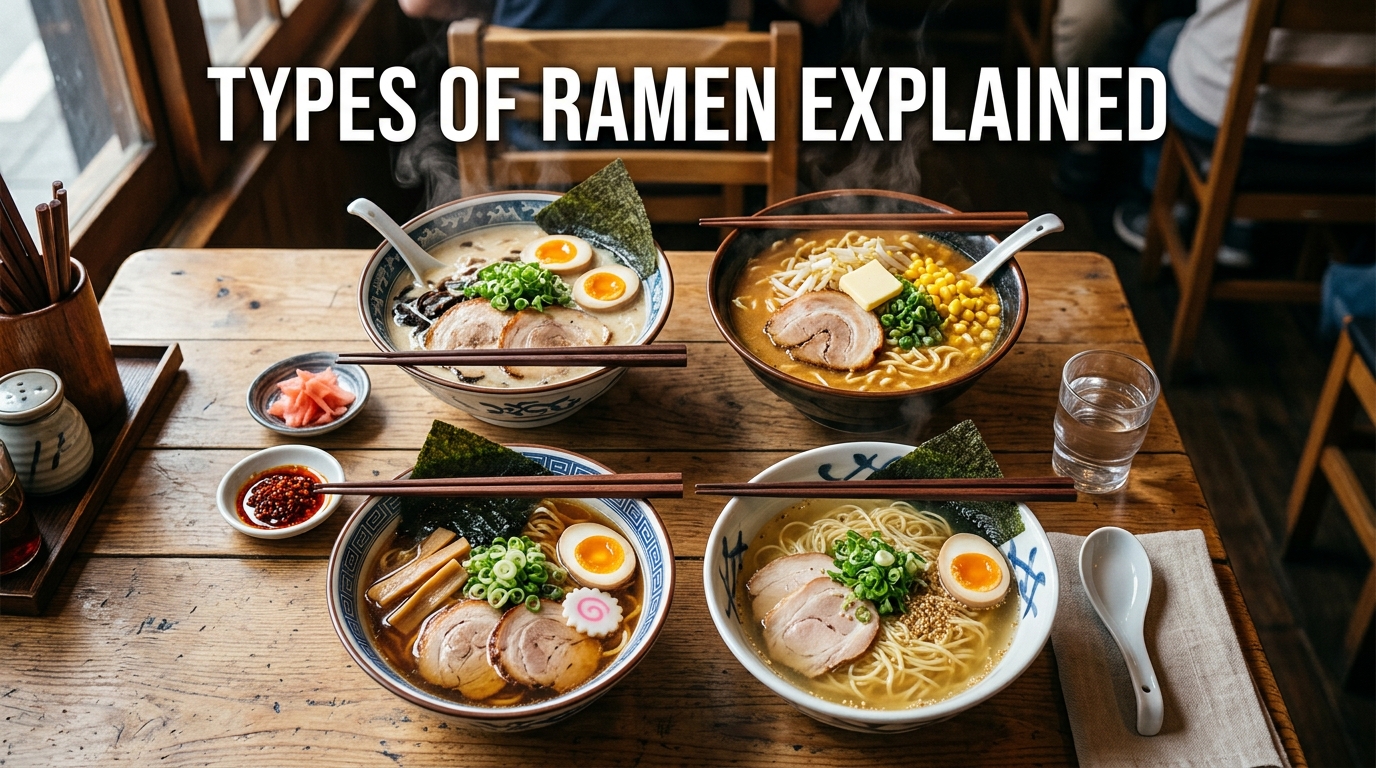
The 4 Main Types of Ramen
These are the foundation of all ramen dishes. Every other type is built from these styles.
Shoyu Ramen (Soy Sauce Based)
Shoyu ramen is one of the most common types of ramen. It uses soy sauce as the main seasoning, giving the broth a rich brown color and a balanced salty flavor.
It is usually lighter than creamy ramen types and often paired with chicken or vegetable-based broth. If you are new to ramen, this is a great starting point.
Shio Ramen (Salt Based)
Shio ramen is the oldest type of ramen. It has a light and clear broth seasoned mainly with salt.
The flavor is simple, clean, and slightly savory. This type highlights the natural taste of the ingredients, making it ideal for people who prefer lighter dishes.
Miso Ramen (Rich & Flavorful)
Miso ramen is known for its deep, rich, and slightly sweet flavor. The broth is made using fermented soybean paste, which gives it a thick and hearty texture.
It often includes toppings like corn, butter, and minced meat. This type is especially popular in colder regions because of its warming and filling nature.
Tonkotsu Ramen (Pork Bone Broth)
Tonkotsu ramen is famous for its creamy white broth made by boiling pork bones for hours. The result is a thick, rich, and deeply flavorful soup.
This type is heavier and more indulgent compared to others. It is one of the most popular ramen types worldwide.
10+ Different Types of Ramen You Should Try
Beyond the main four, there are many different types of ramen noodles and styles that offer unique experiences.
- Tsukemen – Noodles served separately for dipping
- Tantanmen – Spicy ramen with chili oil and minced meat
- Hakata Ramen – Thin noodles with rich tonkotsu broth
- Sapporo Ramen – Miso-based with butter and corn
- Tokyo Style Ramen – Soy sauce-based with curly noodles
- Kitakata Ramen – Thick, chewy noodles with light broth
- Hiyashi Chuka – Cold ramen served in summer
- Chicken Paitan Ramen – Creamy chicken-based broth
- Seafood Ramen – Broth made from fish or shellfish
- Vegan Ramen – Plant-based broth and toppings
These variations show how flexible ramen can be. From light and simple to rich and spicy, there is a ramen type for everyone.
Types of Ramen Noodles Explained
Ramen noodles are just as important as the broth. They come in different shapes and textures, which change the overall experience.
Thin vs Thick Noodles
Thin noodles are often used in lighter broths, while thick noodles are better for rich and heavy soups.
Straight vs Curly Noodles
Curly noodles hold more broth, while straight noodles give a smoother bite.
Fresh vs Instant Noodles
Fresh noodles have better texture and flavor, while instant noodles are quick and convenient.
Common Ramen Toppings
Toppings are what make each bowl unique. Some of the most common ramen toppings include:
- Chashu (braised pork)
- Soft-boiled eggs
- Green onions
- Nori (seaweed)
- Corn and butter
- Bamboo shoots
- Mushrooms
These toppings enhance both the flavor and presentation of ramen.
Ramen Ingredients: What Goes Into a Perfect Bowl?
A perfect ramen bowl is made from carefully selected ingredients.
Broth
Can be chicken, pork, seafood, or vegetable-based.
Noodles
Made from wheat flour, water, salt, and kansui (alkaline water).
Seasoning (Tare)
The base flavor—soy sauce, salt, or miso.
Oils & Flavors
Garlic oil, chili oil, and sesame oil add depth.
How to Choose the Right Type of Ramen
If you are unsure which ramen to try, here is a simple guide:
- Light flavor: Go for Shio or Shoyu
- Rich and creamy: Choose Tonkotsu
- Deep and bold: Try Miso
- Spicy: Pick Tantanmen
Choosing the right ramen depends on your taste preference.
Most Popular Ramen Types Around the World
Ramen has become a global dish. While Japan remains its origin, ramen is now popular in places like Dubai, the USA, and Europe.
In Dubai, ramen is especially loved for its rich flavors and variety. Food lovers are always exploring different kinds of ramen across restaurants.
Best Types of Ramen to Try at Japanos Dubai
If you want to experience authentic ramen, visiting a Japanese restaurant is the best option.
At Japanos Dubai, you can explore a variety of ramen dishes made with fresh ingredients and rich broths. Whether you prefer something light or creamy, there is something for everyone.
You can also explore their full menu. Learn more about their Japanese dining experience.
FAQs About Types of Ramen
1.What are the main types of ramen?
The four main types are Shoyu, Shio, Miso, and Tonkotsu.
2.Which type of ramen is best?
It depends on your taste. Tonkotsu is rich, while Shio is light.
3.What is the most popular ramen?
Tonkotsu ramen is one of the most popular worldwide.
4.Are ramen noodles healthy?
They can be part of a balanced diet depending on ingredients and portion size.
5.What makes ramen different from other noodles?
The broth and seasoning make ramen unique compared to other noodle dishes.