While they may seem similar at first glance, each one is unique in preparation, presentation, and taste. Knowing the nigiri vs maki vs sashimi difference will not only help you order with confidence but also deepen your appreciation for Japanese culinary traditions.
This guide will take you beyond the basics and give you a complete understanding of sushi types, how they differ, and which one might suit your taste preferences best.
What Is Sushi? (Clearing the Biggest Misconception)
Before exploring the different types, it is important to answer a very common question: what is sushi?
Many people believe sushi simply means raw fish. However, that is not entirely correct. Sushi actually refers to vinegared rice that is paired with a variety of ingredients. These ingredients may include raw fish, cooked seafood, vegetables, or even egg.
This is why sushi can come in many forms. The rice is the defining element, not the fish.
This also explains why sashimi is often misunderstood. Although it is commonly found in sushi restaurants, it does not include rice, which means it is technically not sushi. This distinction is essential when learning about the different types of sushi.
A Quick Overview of the Main Types of Sushi
To build a strong foundation, here is a simple breakdown of the three main types covered in this guide:
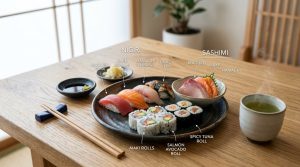
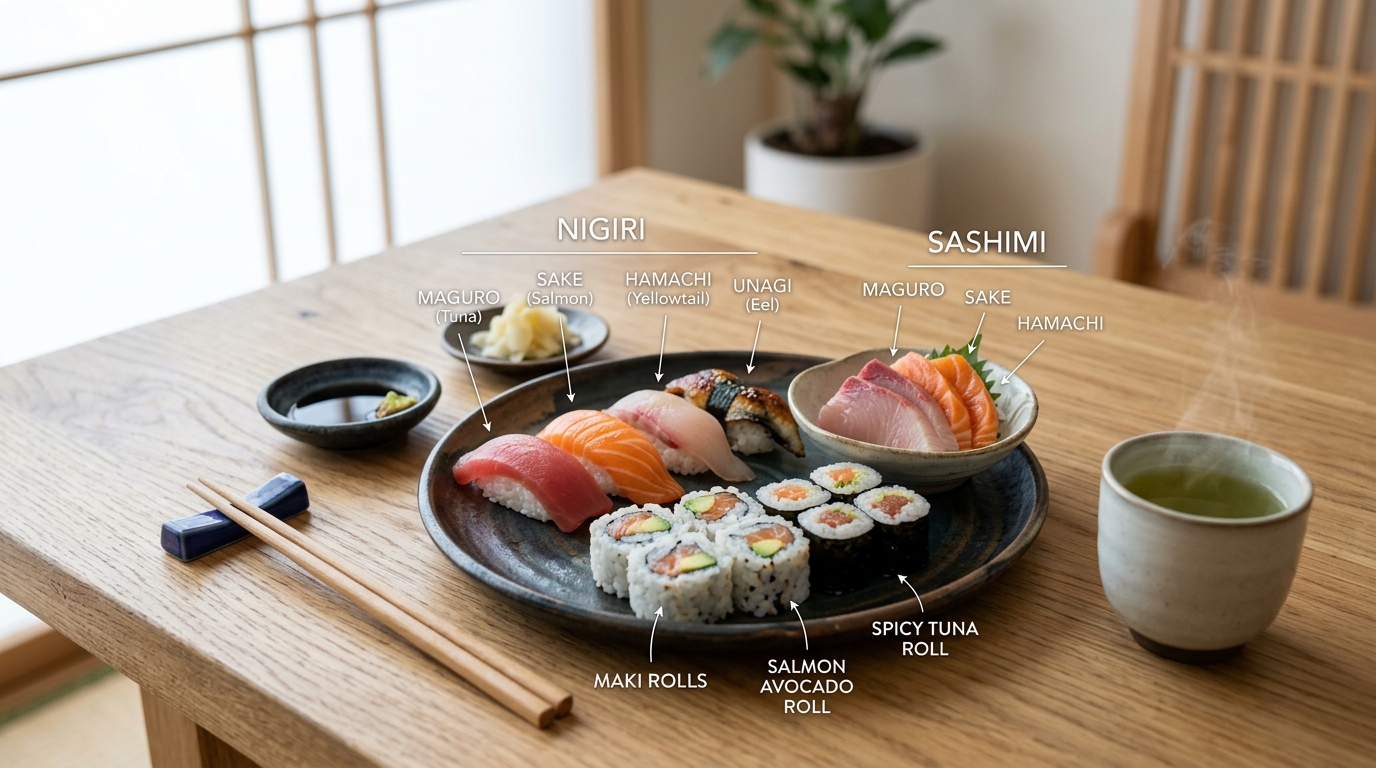
- Nigiri: Hand-pressed rice topped with fish or seafood
- Maki: Rolled sushi wrapped in seaweed and sliced into pieces
- Sashimi: Thinly sliced raw fish served without rice
Each of these offers a completely different dining experience, from texture to flavor to presentation.
What Is Nigiri Sushi?
If you are asking, “what is nigiri sushi?”, think of it as the most traditional and minimalist form of sushi.
Nigiri is made by shaping a small mound of vinegared rice by hand and placing a slice of fish or seafood on top. It is usually served in pairs and is designed to be eaten in one bite.
Key Characteristics of Nigiri
Nigiri stands out because of its simplicity. There are no extra fillings or sauces to distract from the core ingredients. Instead, the focus is on balance and quality.
Some defining features include:
- Hand-pressed rice base
- Fresh fish or seafood topping
- Minimal ingredients
- Often brushed with soy sauce or paired with wasabi
Popular Nigiri Toppings
Nigiri can be made with a wide variety of ingredients. Some of the most popular options include:
- Salmon (sake)
- Tuna (maguro)
- Shrimp (ebi)
- Eel (unagi)
- Octopus (tako)
Each topping brings a different texture and flavor, making nigiri a great way to explore high-quality seafood.
Why Choose Nigiri?
Nigiri is ideal for people who want an authentic and traditional sushi experience. Because it uses fewer ingredients, it allows you to truly taste the freshness and quality of the fish.
What Is Maki Sushi?
When people think of sushi, they are often picturing maki. If you are wondering “what is maki sushi?”, it is the rolled version of sushi that is cut into bite-sized pieces.
Maki is made by layering rice and fillings on a sheet of seaweed (nori), rolling it tightly, and slicing it into small rounds.
Types of Maki Rolls
Maki comes in several variations depending on size and preparation style:
- Hosomaki: Thin rolls with one main ingredient (e.g., cucumber or tuna)
- Chumaki: Medium-sized rolls with two to three fillings
- Futomaki: Thick rolls with multiple ingredients
- Uramaki: Inside-out rolls where rice is on the outside
Common Maki Fillings
Maki is versatile and can include a wide range of ingredients such as:
- Crab or imitation crab
- Avocado
- Cucumber
- Spicy tuna
- Tempura shrimp
This variety makes maki one of the most accessible different types of sushi for beginners.
Why Choose Maki?
Maki is perfect for those new to sushi because it often combines familiar flavors and textures. It is also less intimidating since the fish is usually mixed with other ingredients.
Sashimi vs Sushi Explained
The topic of sashimi vs sushi explained is one of the most searched questions, and for good reason.
Sashimi consists of thinly sliced raw fish or seafood served without rice. Because sushi must include vinegared rice, sashimi is technically a separate category of Japanese cuisine.
What Makes Sashimi Unique?
Sashimi is all about purity and precision. There are no added ingredients to mask the flavor, which means the quality of the fish must be exceptional.
Key characteristics include:
- No rice
- Thinly sliced raw fish
- Served with soy sauce, wasabi, and garnishes
- Focus on freshness and texture
Popular Types of Sashimi
Some of the most common sashimi options include:
- Salmon
- Tuna
- Yellowtail
- Scallops
- Squid
Why Choose Sashimi?
Sashimi is ideal for those who appreciate clean, natural flavors and high-quality seafood. It is often considered a more refined and premium choice compared to other sushi types.
Nigiri vs Maki vs Sashimi Difference (Detailed Comparison)
Understanding the nigiri vs maki vs sashimi difference is key to choosing the right dish.
1. Ingredients
Nigiri and maki both include rice, while sashimi does not. Maki often includes additional ingredients like vegetables or sauces, while nigiri keeps things simple.
2. Preparation Style
Nigiri is hand-formed, maki is rolled, and sashimi is sliced. Each method requires a different level of skill and technique.
3. Flavor Experience
Nigiri offers a balanced taste of rice and fish. Maki provides a mix of flavors due to multiple ingredients. Sashimi delivers a pure seafood experience.
4. Presentation
Nigiri is served as individual pieces, maki comes in rolls, and sashimi is arranged in elegant slices.
5. Difficulty for Beginners
Maki is generally the easiest for beginners, followed by nigiri. Sashimi is best suited for those already comfortable with raw fish.
Other Popular Types of Sushi You Should Know
To fully understand the types of sushi, it helps to explore beyond the basics.
Temaki (Hand Rolls)
Cone-shaped sushi rolls that are meant to be eaten by hand. They are larger and less formal than maki.
Uramaki (Inside-Out Rolls)
A variation of maki where rice is on the outside and seaweed is inside. Often topped with sesame seeds or fish roe.
Chirashi (Scattered Sushi)
A bowl of sushi rice topped with assorted fish and vegetables. It is less structured but equally delicious.
Inari Sushi
Rice stuffed inside sweet fried tofu pockets. This is a great vegetarian-friendly option.
How to Eat Sushi Properly
To truly enjoy the different types of sushi, it helps to follow a few traditional guidelines.
- Eat nigiri in one bite if possible
- Dip fish side (not rice) into soy sauce
- Use wasabi sparingly
- Cleanse your palate with ginger between bites
These small details can enhance your overall dining experience.
Choosing the Right Sushi for Your Taste
Your choice depends on your preferences:
- If you like variety and flavor combinations, go for maki
- If you prefer simplicity and authenticity, choose nigiri
- If you enjoy pure seafood taste, try sashimi
Exploring all three will give you a complete understanding of sushi.
Health Benefits of Sushi
Sushi is not only delicious but also offers several health benefits:
- Rich in omega-3 fatty acids
- High in protein
- Low in saturated fat
- Contains essential vitamins and minerals
However, moderation is important, especially with soy sauce due to sodium content.
Common Mistakes Beginners Make
Many people misunderstand sushi when they first try it. Here are a few common mistakes:
- Thinking all sushi contains raw fish
- Confusing sashimi with sushi
- Overusing soy sauce or wasabi
- Avoiding sushi due to unfamiliarity
Learning the basics helps you avoid these mistakes and enjoy the experience fully.
Final Thoughts
Exploring the types of sushi opens the door to a rich and diverse culinary world. From the simplicity of nigiri to the creativity of maki and the purity of sashimi, each type offers something unique.
Now that you understand the nigiri vs maki vs sashimi difference, you are better equipped to navigate any sushi menu with confidence. Whether you are dining at a high-end restaurant or trying sushi for the first time, this knowledge enhances both your experience and appreciation.
The next time you see sushi on the menu, you won’t just order—you’ll understand exactly what you’re choosing.
FAQs
1. What are the different types of sushi?
The most common types of sushi are nigiri, maki, and sashimi. Nigiri is rice topped with fish, maki is rolled sushi, and sashimi is sliced raw fish served without rice.
2. What is the difference between nigiri, maki, and sashimi?
Nigiri is hand-pressed rice with fish on top, maki is rolled sushi with fillings wrapped in seaweed, and sashimi is raw fish without rice.
3. Is sashimi considered sushi?
No, sashimi is not considered sushi because it does not include vinegared rice, which is the key ingredient in sushi.
4. Which type of sushi is best for beginners?
Maki sushi is best for beginners because it often contains cooked or mild ingredients and is easier to eat compared to nigiri or sashimi.
5. What is nigiri sushi made of?
Nigiri sushi is made of vinegared rice shaped by hand and topped with a slice of raw or cooked fish, sometimes with a small amount of wasabi.