For vegetarians, vegans, and anyone simply looking to eat less meat, Dubai offers several ways to enjoy Japanese ramen. The important part is understanding the difference between a vegetarian bowl and a genuinely vegan one, because ingredients such as eggs, dairy, fish-based seasonings, and certain broths can change whether a ramen is suitable for your diet.
This guide explains what to look for when ordering vegan ramen in Dubai, how vegetarian and vegan ramen differ, which ingredients matter most, and what to consider when choosing a bowl at a Japanese restaurant.
What Is Vegetarian Ramen in Dubai?
Vegetarian ramen is ramen prepared without meat or seafood. Instead of chicken, beef, pork, or seafood broth, a vegetarian bowl can use vegetable-based broth combined with ingredients such as mushrooms, soy, sesame, miso, tofu, bamboo shoots, corn, spring onions, and other vegetables.
However, vegetarian does not automatically mean vegan. A vegetarian ramen may still contain egg, dairy, or other animal-derived ingredients. Vegan ramen goes further by avoiding meat, seafood, eggs, dairy, and other animal-derived ingredients.
This distinction is especially important when eating out. If you follow a strict vegan diet, asking about the broth, noodles, toppings, sauces, and cooking ingredients is just as important as checking the main protein.
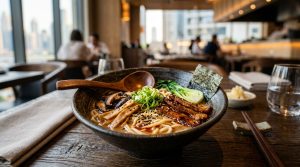
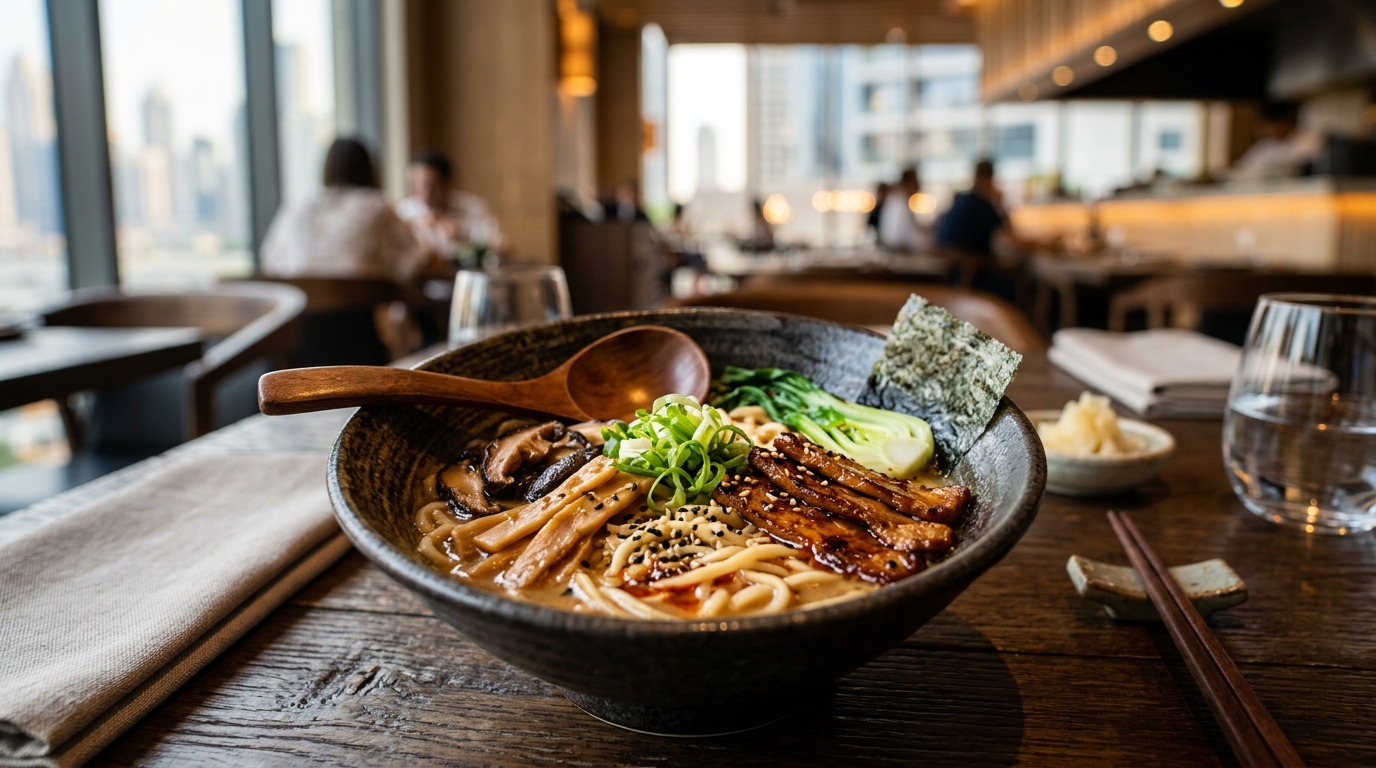
At Japanos Dubai, the current ramen menu includes Veggie Tantan Ramen, made with soy meat, rice pasta, vegetable broth with soy sauce, sesame sauce, bamboo, shiitake mushrooms, and leeks. The listed price is AED 65.
Vegetarian Ramen Dubai: What Makes a Great Bowl?
A good vegetarian ramen should offer more than vegetables sitting in soup. The quality of the bowl depends on how its main components work together.
The broth provides the foundation. Vegetable broth can be made more satisfying with ingredients such as mushrooms, miso, soy sauce, sesame, garlic, ginger, or other seasonings that build umami.
The noodles provide texture and make the bowl filling. Different ramen restaurants may use different noodle styles, while some plant-based recipes use alternatives such as rice pasta.
The toppings add texture, color, freshness, and additional flavor. Mushrooms, bamboo shoots, spring onions, corn, tofu, seaweed, and other vegetables can turn a simple broth into a more complete meal.
Finally, sauces and oils can significantly change the character of the ramen. Sesame-based sauces create a richer and nuttier profile, while chili can introduce heat and extra complexity.
Vegan Ramen Dubai: What Should You Check?
When searching for vegan ramen in Dubai, the word “vegetable” on a menu is not enough to confirm that the dish is vegan.
The broth is one of the first things to check. A bowl described as vegetable ramen may still use a non-vegetarian stock or seasoning. Some sauces can also contain ingredients that are not immediately obvious from the dish name.
Egg is another common ingredient to watch for. Traditional ramen often includes a soft-boiled or marinated egg, so a vegan diner should confirm whether it is included and whether it can be removed.
You should also check the noodles and toppings if you have strict dietary requirements. The safest approach is to ask the restaurant directly whether the complete bowl, including broth, noodles, sauce, and toppings, meets your requirements.
For diners who are vegetarian rather than vegan, the range of possible bowls is usually broader because eggs and dairy may still be acceptable.
Japanos Veggie Tantan Ramen in Dubai
For diners specifically looking for a plant-based ramen option, Japanos offers Veggie Tantan Ramen as part of its current ramen menu.
The bowl combines soy meat with rice pasta and a vegetable broth flavored with soy sauce and sesame sauce. It is finished with bamboo, shiitake mushrooms, and leeks, creating a combination of plant-based protein, noodles, vegetables, and a rich sesame-forward flavor. Japanos currently lists the bowl at AED 65.
This makes the bowl particularly relevant for people searching for vegetarian ramen in Dubai who want something more substantial than a basic vegetable noodle soup.
The sesame component is also important because sesame-based flavors can add richness and nuttiness to a vegetable broth. Combined with mushrooms and soy meat, the bowl has several sources of savory flavor and texture.
Vegetarian vs Vegan Ramen: What’s the Difference?
The difference between vegetarian and vegan ramen comes down to the ingredients used throughout the entire bowl.
| Ramen type | Meat | Seafood | Egg | Dairy | Plant-based ingredients |
| Vegetarian | No | No | May contain | May contain | Usually |
| Vegan | No | No | No | No | Yes |
A vegetarian can generally choose a bowl that contains plant-based ingredients while still allowing eggs or dairy, depending on their personal diet.
A vegan diner needs to check every component. A vegetable broth does not necessarily guarantee that the final bowl is vegan.
If you are ordering for a group with different dietary preferences, this distinction is useful because one person may be comfortable with a vegetarian bowl while another may require a completely plant-based meal.
Best Vegetarian Ramen Dubai: How to Choose Your Bowl
There is no single ramen style that works for everyone. Your ideal bowl depends on the flavor and texture you enjoy.
If you like rich and nutty flavors, look for sesame-based ramen such as a tantan-style bowl. Sesame can provide body and richness without relying on meat-based ingredients.
If you prefer fresh and lighter flavors, a vegetable broth with mushrooms, spring onions, bamboo, and other vegetables may be a better fit.
If you want more protein, look for bowls containing tofu or soy-based protein. These ingredients can make plant-based ramen more filling while adding a different texture from the noodles and vegetables.
If you enjoy spicy Japanese food, a plant-based tantan ramen can combine sesame richness with chili and other seasonings for a more intense bowl.
The best approach is to choose based on the flavor profile you enjoy rather than simply searching for the word “vegetarian.”
Key Ingredients in Plant-Based Ramen
Understanding common ingredients makes it easier to identify a good bowl when exploring vegan Japanese food in Dubai.
Vegetable Broth
Vegetable broth forms the base of many meat-free ramen bowls. It can be light and clean or deep and savory depending on the vegetables, mushrooms, miso, soy sauce, and other seasonings used.
A strong plant-based broth should have enough flavor to stand on its own rather than relying entirely on toppings.
Mushrooms
Mushrooms are particularly useful in vegetarian ramen because they provide an earthy, savory character. Shiitake mushrooms are also common in Japanese cooking and pair naturally with soy, sesame, and vegetable-based flavors.
Tofu and Soy Protein
Tofu is a familiar plant-based protein that works well in Japanese dishes. Soy meat is another option used to provide a more substantial texture.
For diners looking for tofu ramen or other high-protein vegetarian options, it is worth checking whether the restaurant offers these as standard toppings or optional additions.
Sesame
Sesame can provide a creamy, nutty flavor without requiring dairy. It is particularly useful in tantan-style ramen, where sesame contributes to the richness of the bowl.
Bamboo Shoots and Spring Onions
Bamboo shoots add a firm, crunchy texture, while spring onions provide freshness and a sharp contrast to rich broth. These simple toppings can make a significant difference to the overall texture of ramen.
How to Make Sure Your Ramen Is Actually Vegan
If you are strictly vegan, ordering ramen requires slightly more attention than ordering a clearly labeled plant-based dish.
Start by asking whether the broth is completely vegetable-based. Then check whether the noodles contain any animal-derived ingredients and whether the sauce or seasoning includes fish, meat, egg, or dairy.
Next, confirm the toppings. Eggs are obvious, but sauces, oils, and garnishes may also need to be checked depending on how strict your diet is.
A simple question such as, “Is the complete ramen vegan, including the broth, noodles, sauce, and toppings?” can prevent confusion.
This is particularly useful because “vegetarian,” “vegan,” and “vegan-friendly” can describe different levels of suitability.
Vegetarian Japanese Food in Dubai Beyond Ramen
Ramen is only one part of Japanese cuisine, so vegetarians do not necessarily need to limit themselves to noodle bowls.
Depending on the restaurant, vegetarian Japanese food can include vegetable maki, edamame, tofu-based dishes, vegetable rice, salads, and other meat-free preparations.
Japanos, for example, also serves Japanese dishes beyond ramen, including sushi, sashimi, and bento options. Its wider menu gives diners the opportunity to combine different Japanese dishes into one meal.
When dining with a mixed group, this variety can be useful. One person may choose vegetarian ramen while others order sushi, chicken, seafood, or other Japanese dishes.
Why Plant-Based Ramen Can Still Be Full of Flavor
One common misconception is that removing meat automatically makes ramen less flavorful. In reality, much of ramen’s character comes from the relationship between broth, seasoning, noodles, toppings, and aromatic ingredients.
Mushrooms can add earthy umami. Miso can provide fermented depth. Soy sauce contributes saltiness and savory flavor. Sesame creates richness, while chili can add heat.
Texture is equally important. Soft noodles, firm bamboo shoots, mushrooms, soy protein, and fresh spring onions can create a much more interesting eating experience than noodles and broth alone.
That is why a well-built plant-based ramen does not need meat to feel complete.
A Simple Guide for Ordering Vegetarian Ramen in Dubai
When choosing a bowl, start with the broth rather than the toppings. Ask whether it is vegetable-based and whether it contains fish or meat stock.
Then consider the protein. Soy meat, tofu, mushrooms, and other plant-based ingredients can make the bowl more satisfying.
After that, check the noodles and toppings, especially if you are vegan. Finally, ask about sauces and oils if you have strict dietary requirements.
For a convenient plant-based choice, Japanos’ Veggie Tantan Ramen combines soy meat, rice pasta, vegetable broth, sesame sauce, bamboo, shiitake mushrooms, and leeks.
Japanos currently has locations in Creek Harbour and JBR, with its Veggie Tantan Ramen available for dine-in and delivery options listed on its website.
Vegetarian Ramen in Dubai for Different Dietary Preferences
The right bowl can vary considerably depending on why you are choosing vegetarian ramen.
For a vegetarian diner, the main concern is avoiding meat and seafood while checking whether egg or dairy fits their personal diet.
For a vegan diner, the complete dish needs to be free from animal-derived ingredients. Broth and sauces deserve particular attention.
For someone reducing meat, a vegetable broth with soy protein and mushrooms can provide a satisfying alternative without requiring a completely vegan diet.
For a first-time ramen diner, a sesame-based bowl can be an approachable option because the flavor is rich and rounded rather than relying only on a strong vegetable taste.
This is one reason tantan-style ramen can work particularly well for people exploring vegetarian Japanese food for the first time.
Final Thoughts
Finding vegetarian ramen in Dubai is about looking beyond the word “vegetarian” and understanding what actually goes into the bowl. The broth, noodles, protein, toppings, sauces, and seasonings all contribute to whether a ramen is vegetarian, vegan, or simply vegetable-forward.
For diners looking for a rich plant-based option, Japanos’ Veggie Tantan Ramen combines soy meat, rice pasta, vegetable broth, sesame sauce, shiitake mushrooms, bamboo, and leeks into a complete ramen bowl.
Whether you are vegan, vegetarian, reducing meat, or simply curious about vegan ramen in Dubai, checking the broth and ingredients first makes it much easier to find a bowl that fits your preferences while still delivering the comforting flavors and textures that make ramen so enjoyable.
FAQs About Vegetarian & Vegan Ramen in Dubai
1. Is vegetarian ramen available in Dubai?
Yes. Dubai has Japanese restaurants offering vegetarian and plant-based ramen options. Japanos currently lists Veggie Tantan Ramen made with soy meat, rice pasta, vegetable broth, sesame sauce, bamboo, shiitake mushrooms, and leeks.
2. Is vegan ramen the same as vegetarian ramen?
No. Vegetarian ramen does not contain meat or seafood but may contain eggs or dairy. Vegan ramen excludes meat, seafood, eggs, dairy, and other animal-derived ingredients. Always check the complete ingredient list if you follow a strict vegan diet.
3. What is a good plant-based protein for ramen?
Tofu and soy-based proteins are common choices. They provide additional texture and make a vegetable-based ramen more filling. Mushrooms can also add substantial savory flavor even though they are not a high-protein substitute.
4. Can vegetarian ramen contain fish broth?
Yes. A ramen can appear vegetable-based because it contains vegetables while still using fish-based stock or seasoning. If you are vegetarian or vegan, confirm that the broth itself meets your dietary requirements before ordering.
5. Where can I find vegetarian ramen in Dubai?
Japanos offers Veggie Tantan Ramen with soy meat, rice pasta, vegetable broth, sesame sauce, bamboo, shiitake mushrooms, and leeks. The current listed price is AED 65, with dine-in and delivery options available through Japanos’ Dubai locations.