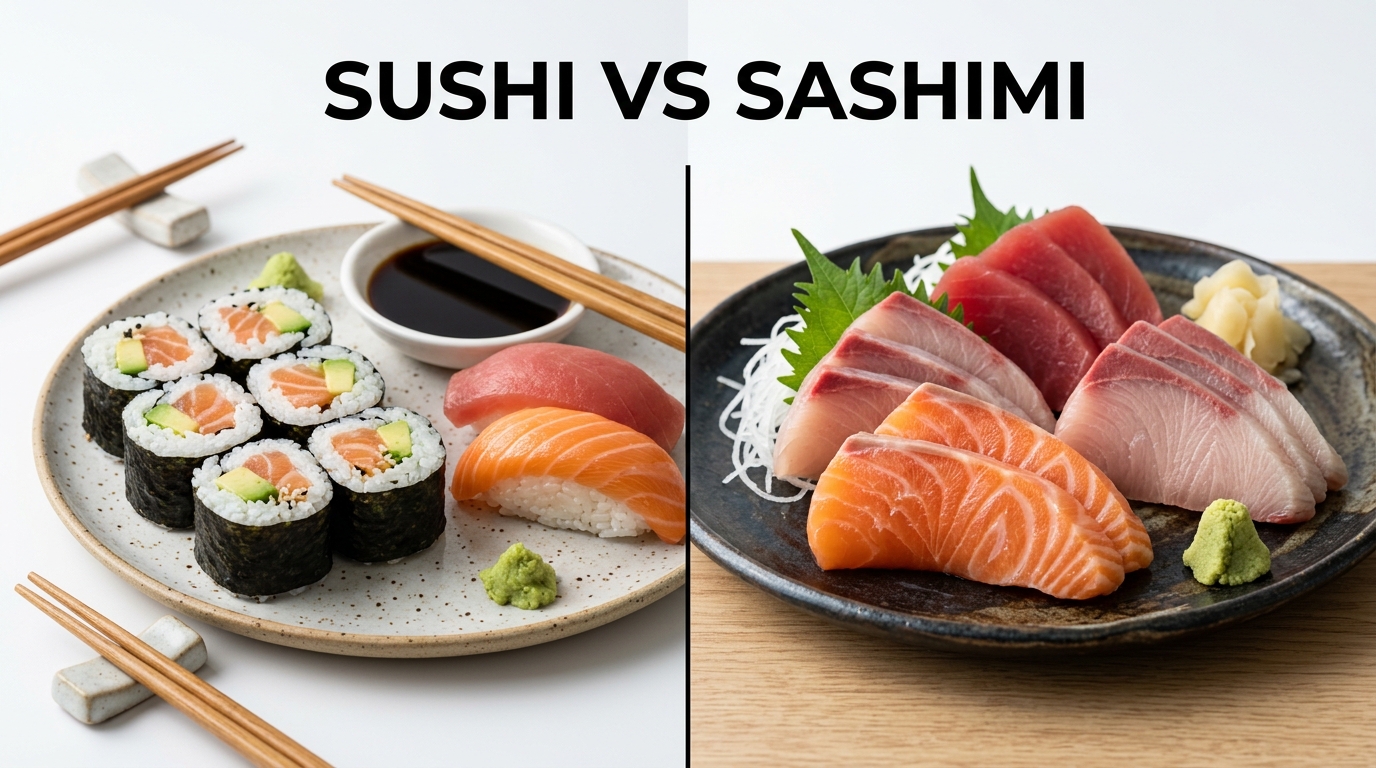
But once you understand them properly, you realize they are completely different dishes.
This guide will explain everything in simple language — no confusing terms — so you fully understand what is the difference between sushi and sashimi, how they are made, how they taste, and which one you should try.
What Is Sushi?
Sushi is a Japanese dish built around one main ingredient: vinegared rice.
That’s the part most people get wrong. Many assume sushi means raw fish, but that’s not true. The word “sushi” actually refers to the seasoned rice, not the fish.The rice is mixed with vinegar, salt, and a bit of sugar, which gives sushi its slightly tangy taste. On top of or around that rice, you can have different ingredients like seafood, vegetables, or even egg.
Sometimes the fish is raw, but in many cases it is cooked.
So if you’re wondering “is sushi raw fish?”, the answer is simple:
No, sushi is not always raw. It can be raw, cooked, or even completely vegetarian.
There are different styles of sushi. You’ve probably seen rolls cut into pieces — that’s called maki. Then there’s nigiri, where a slice of fish is placed on top of rice. There are also inside-out rolls and hand rolls, each with its own style, but they all have one thing in common: rice is always present.
That’s what defines sushi.
What Is Sashimi?
Sashimi is much simpler, but also more pure.
It is just thinly sliced raw fish or seafood, served on its own without rice. No rolls, no mixing, no extra ingredients — just fresh, clean slices.This is why sashimi is often seen as a more premium dish. Since there is nothing to hide behind, the quality of the fish has to be very high.
When people ask “what is sashimi?”, the simplest answer is this:
Sashimi is raw seafood served by itself, without rice.
It is usually eaten with soy sauce, wasabi, and sometimes pickled ginger, but those are just side elements. The focus is always on the fish.
Now to answer another common question directly:
Does sashimi have rice?
No — sashimi never includes rice. If there is rice, it is no longer sashimi.
Sushi vs Sashimi: Key Differences Explained
Understanding the difference between sushi and sashimi becomes very easy when you look at their core idea.
Sushi is about combining flavors. You have the soft, slightly sour rice paired with toppings like fish, vegetables, or sauces. It’s balanced and layered.
Sashimi, on the other hand, is about purity. It focuses only on the natural taste and texture of the seafood.
Another important difference is preparation. Sushi involves shaping rice, rolling ingredients, or assembling pieces. It takes technique and structure. Sashimi is all about knife skill — cutting the fish perfectly so it looks clean and tastes smooth.
Taste also plays a big role. Sushi feels more complete because of the mix of ingredients. Sashimi feels lighter and cleaner because it’s just the fish.
So if we simplify the difference between sushi and sashimi:
Sushi includes rice and can include many ingredients.
Sashimi is only raw fish or seafood, without rice.
What’s the Difference Between Sushi and Sashimi? (Simple Answer)
If you want the quickest possible answer, here it is:
Sushi is a dish made with vinegared rice and other ingredients.
Sashimi is thinly sliced raw fish served without rice.
That’s it.
This is the exact answer people are looking for when they search “what’s the difference between sushi and sashimi” or “whats the difference between sushi and sashimi.”
Is Sushi Raw Fish?
This is one of the biggest misconceptions.
Not all sushi contains raw fish. In fact, many popular sushi dishes are cooked or vegetarian. Shrimp tempura rolls, crab sticks, and even avocado rolls are all sushi, even though they don’t include raw fish.
The confusion happens because raw fish is common in sushi, but it is not required.
So again, to answer clearly:
Sushi can be raw or cooked. The rice is what makes it sushi.
Does Sashimi Have Rice?
No, and this is a strict rule.
Sashimi is always served without rice. The moment rice is added, it becomes a different dish, usually sushi.
This is one of the easiest ways to tell them apart on a menu. If you see rice, it’s sushi. If it’s just slices of fish, it’s sashimi.
Which Is Healthier: Sushi or Sashimi?
When people compare sushi vs sashimi, health is a common concern.
Sashimi is usually the healthier option because it is pure protein with no added rice. It is lower in calories and carbs, making it a good choice for people who want something light.
Sushi, on the other hand, includes rice, which adds carbohydrates and calories. Some rolls also include sauces, which can increase sugar and fat content.
That said, sushi is still a balanced meal, especially if you choose simple options without heavy sauces.
So the answer depends on your goal. If you want something lighter and high in protein, sashimi is better. If you want something more filling and balanced, sushi works well.
Which One Should You Try First?
If you are new to Japanese food, sushi is usually the better starting point.
It is easier to eat, more familiar in taste, and offers variety. You can try cooked options first and slowly move toward raw fish if you’re comfortable.
Sashimi is better for people who already enjoy seafood and want a more direct, pure experience.
There is no right or wrong choice — it just depends on your comfort level and taste preference.
How Sushi and Sashimi Are Served in Japanese Cuisine
In traditional Japanese dining, sashimi is often served before sushi.
The reason is simple. Sashimi lets you taste the natural flavor of the fish without anything else. Once you eat sushi, your taste buds are influenced by rice, vinegar, and sauces.
So the meal starts clean and simple, then moves to more complex flavors.
This is something most basic articles don’t explain, but it helps you understand the cultural side as well.
Common Misconceptions About Sushi and Sashimi
A lot of confusion comes from a few common misunderstandings.
The biggest one is thinking sushi means raw fish. As explained earlier, that’s not true. Sushi is about rice, not raw seafood.
Another misconception is that sashimi and sushi are interchangeable. They are not. They are separate dishes with different preparation methods and meanings.
Some people also think sashimi is just a type of sushi, but it is actually its own category in Japanese cuisine.
Once you understand these points, the confusion around sushi vs sashimi disappears completely.
Final Thoughts
Now you fully understand sushi vs sashimi in the simplest and most complete way.
Sushi is about rice, variety, and combination.
Sashimi is about simplicity, freshness, and pure flavor.
Both are important parts of Japanese cuisine, and both offer a different experience.
The next time you see them on a menu, you won’t just know the difference — you’ll know exactly what you’re ordering and why.
FAQs
1. What is the difference between sushi and sashimi?
Sushi includes vinegared rice with various ingredients, while sashimi is raw fish served without rice.
2. What is sashimi?
Sashimi is thinly sliced raw fish or seafood, served fresh and without rice.
3. What’s the difference between sushi and sashimi in simple terms?
Sushi has rice. Sashimi does not.
4. Does sashimi have rice?
No, sashimi never includes rice.
5. Is sushi raw fish?
Not always. Sushi can be raw, cooked, or vegetarian.
6. Difference between sushi and sashimi in taste?
Sushi has a mixed flavor because of rice and toppings, while sashimi tastes like pure fish.